A clogged drain that keeps returning weeks after you clear it is often caused by hard water minerals coating the inside of the pipe, not grease or hair. Descaling the line, not just clearing it, is the fix that actually lasts.
Store-bought cleaners and a plunger only clear the surface layer. Here is what K. Jenkins Plumbing actually finds when a Virginia or West Virginia drain keeps clogging no matter how often it gets cleared.
Key Takeaways
- Hard water leaves calcium and magnesium minerals behind every time water passes through a pipe
- Mineral deposits from hard water narrow the interior diameter until even small debris causes a backup
- Much of Northern Virginia has very hard water, well above the threshold plumbers consider a risk
- A drain that clogs again within weeks of clearing often has scale, not grease, as the real cause
- A water softener slows new buildup, but existing scale still needs professional descaling first
- K. Jenkins Plumbing serves 36-plus Virginia and West Virginia locations with same-day availability
What Is Hard Water Really Doing Inside Your Home Pipes?
The layer of calcium and magnesium deposits that hard water leaves behind on the interior walls of a pipe every time water flows through, gradually shrinking how much water the line can carry.
Every gallon that passes through your plumbing leaves behind a microscopic residue. It never washes away. That residue keeps building in the same spots year after year, slowly hardening into the layer behind most clogged drain calls.
Over months and years, those deposits harden into a crusty layer that behaves differently from a typical grease clog in a Virginia home. Calcium deposits in pipes bond directly to metal and plastic surfaces, so a plunger rarely removes them.
- Bathroom sink and shower drains show scale first, since those fixtures run hot water most often
- White or chalky residue around a faucet or drain opening is a visible sign of the same mineral buildup
- A drain blocked by scale usually narrows gradually instead of shutting off all at once
Why Does a Clogged Drain From Hard Water Keep Coming Back?
A standard drain clearing method removes whatever is currently blocking the pipe, but it does not remove the mineral layer coating the walls underneath. That is why the same drain clogs again within weeks.
Reduced pipe diameter from ongoing scale buildup means less debris is needed to trigger the next backup. A pipe that once needed a large clump of hair or food to block now clogs on far less material than before.
| Same Drain Clogging Again After a Cleanout? Our licensed plumbers provide drain cleaning services that descale the pipe instead of just clearing the surface blockage, backed by upfront pricing, no hidden fees, and a full 100 percent workmanship guarantee. |
According to EPA’s secondary drinking water standards guidance, scale is a mineral deposit that builds up inside pipes and restricts or blocks water flow over time, the same mechanism behind a hard water clogged drain.
- A newly cleared drain that slows down again within a month points to scale, not a fresh clog
- Multiple fixtures narrowing at the same steady rate suggests hard water pipe damage throughout the home
- A scheduled commercial maintenance plan catches scale buildup before it causes a full backup
- Older galvanized pipe scales faster than newer PEX or copper lines carrying the same hard water
Read More About: Signs Your Virginia Home Needs Copper Repiping
Is Your Virginia Home Sitting in a Hard Water Zone Now?
Water hardness Virginia levels vary by well and municipal source, but much of the Shenandoah Valley and Northern Virginia sit well above the threshold plumbers consider a real risk to home plumbing systems.
According to Virginia Cooperative Extension water hardness data, water above 180 milligrams per liter is classified as very hard, a level common across much of the region K. Jenkins Plumbing serves, from the Shenandoah Valley through Loudoun County.
The problem is not unique to this region. According to HardWaterHQ’s national hard water statistics, roughly 85 percent of United States households receive water hard enough to leave mineral deposits on fixtures and inside plumbing lines.
Homes on private wells in Winchester, Front Royal, and the Eastern Panhandle of West Virginia often see even higher mineral concentrations than municipal water customers living nearby in town centers.
- Well water customers should expect faster scale buildup than homes on treated municipal supply
- A visible chalky ring inside toilet tanks is a quick way to gauge your home’s water hardness
- Older homes with original plumbing show scale-related clogs sooner than recently repiped homes
- A professional water hardness test confirms whether your home falls in the very hard range
| Not Sure If Hard Water Is Behind Your Drain Problem? K. Jenkins Plumbing tests your water hardness and inspects the line carefully before recommending a fix, with same-day availability across 36-plus service areas in Virginia and West Virginia’s Eastern Panhandle. |
How Can You Tell Hard Water Is the Real Cause of Your Clog?
The visible white or gray crust hard water minerals leave on faucets, showerheads, and drain openings, and a reliable early clue that the same buildup is happening out of sight inside the pipe.
A drain in a Virginia home that clogged years ago and just started clogging again, without any real change in household habits or usage, usually points to gradually accumulating scale rather than a brand new source of debris.
- Faucets and showerheads with visible white crust almost always share plumbing with a scaling drain
- Water that feels slippery or leaves spots on dishes signals hardness levels worth having tested
- A slow drain that never fully clears, even after cleaning, suggests scale rather than a solid clog
- A licensed plumbing inspection confirms scale as the true cause before any repair begins
- Break rooms and restrooms on commercial properties show the exact same scale pattern as home fixtures
Water Softener vs Professional Descaling: Which One Wins?
A water softener installation treats water before it enters your plumbing, which prevents new scale from forming. It does nothing to remove the deposits already causing a clogged drain inside existing pipes.
| Approach | What It Does | Limitation |
| Water softener | Prevents new mineral buildup at the source | Does not remove scale already inside pipes |
| Professional descaling | Clears existing mineral deposits from pipe walls | Needs to be repeated if hardness is untreated |
| Chemical drain cleaner | Clears a fresh surface clog temporarily | Does not touch hardened mineral scale at all |
Best combined approach: a professional pipe descaling service to clear existing buildup, paired with a whole-home softener to stop the cycle from starting over.
A softener alone will not fix a drain that is already scaled up badly in a Virginia home. K. Jenkins Plumbing clears the existing buildup first, then talks about a softener so the same clog does not return again next winter.
- Descaling alone without a softener means scale will likely return within a few years
- A softener alone without descaling leaves existing buildup in place, clogging the same spots
- Combining both addresses the current clog and prevents the next one from forming
How Do Plumbers Actually Clear Hard Water Scale From Pipes?
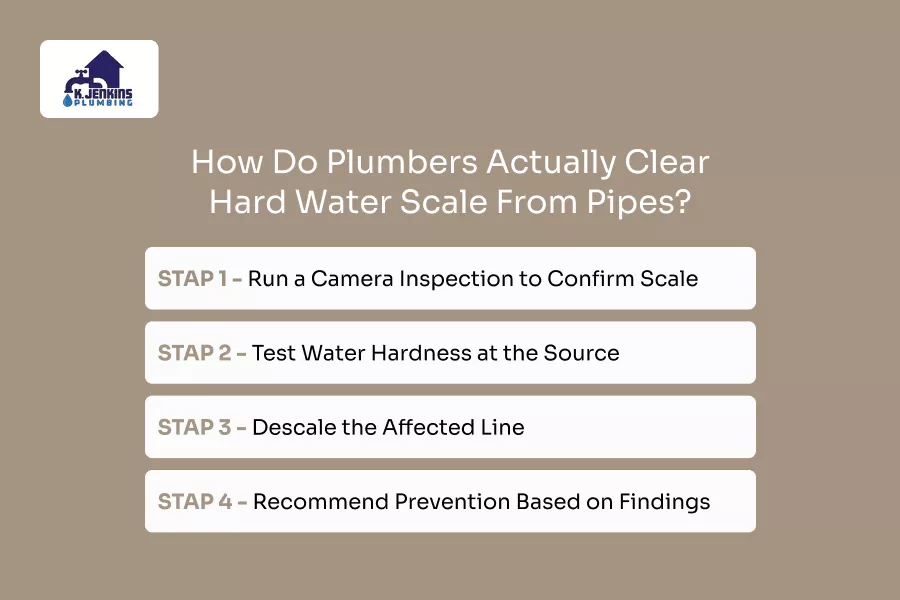
Step 1: Run a Camera Inspection to Confirm Scale
A video camera fed through the drain shows whether the buildup is mineral scale, grease, or a solid blockage, since each one requires a different clearing method to fully resolve the underlying problem.
Step 2: Test Water Hardness at the Source
A quick hardness test on your tap water confirms whether ongoing mineral buildup is likely, which helps determine whether a softener installation should be part of the long-term fix for your entire home.
Step 3: Descale the Affected Line
A high-pressure water jet or mechanical descaling tool scours the entire interior diameter of the pipe, removing hardened mineral deposits that a standard drain snake leaves behind, restoring flow closer to the pipe’s original diameter.
Step 4: Recommend Prevention Based on Findings
Depending on the hardness test results, the plumber recommends a whole-home softener, point-of-use treatment, or a simple maintenance schedule to prevent the next clogged drain inside your pipes down the road.
| Ready to Clear Scale Instead of Just the Symptom? Our team provides pipe descaling across Winchester, Fairfax, Martinsburg, and 36-plus surrounding Virginia areas, with licensed technicians, upfront pricing, and a 100 percent satisfaction and workmanship guarantee. |
Read More About: Why Is My Water Bill So High? Leak Detection for Virginia Homes
Is a Whole-Home Water Softener Worth It for Recurring Clogs?
For homes with confirmed very hard water and a long history of repeat clogs, a softener often pays for itself by cutting how often the same drain needs professional attention within a year or two of installation.
Homeowners across our Virginia service area who add a softener after professional descaling usually stop calling about the same drain again year after year, which is the real difference between treating the symptom and removing the cause.
Softened water benefits extend well beyond just one single drain, since a softener also reduces mineral buildup in water heaters and fixtures throughout the entire house over the following several years.
- Homes with private wells and confirmed hardness above 180 milligrams per liter benefit the most
- Households replacing fixtures or descaling more than once a year should strongly consider a softener
- Residential plumbing services from a licensed plumber can confirm whether your specific water source justifies the investment
Conclusion
A clogged drain from hard water is rarely bad luck. Mineral deposits coat the inside of your pipes over time, and clearing the surface blockage without addressing that scale is why the problem returns.
Jenkins Plumbing provides licensed descaling and softener guidance backed by a satisfaction and workmanship guarantee. The Company offers same-day availability. Contact us today if your drain keeps clogging.
FAQs
Does Hard Water Really Cause Your Pipes to Clog Over Time?
Yes. Hard water leaves calcium and magnesium deposits on the interior walls of pipes, and those deposits narrow the pipe diameter until tiny debris causes a full backup inside your home’s water lines.
How Can You Tell if Your Home Pipes Have Mineral Buildup?
White or chalky crust on your faucets and showerheads sharing the same plumbing is a strong sign, especially when paired with a drain that slows down again soon after each time you clear it out fully.
Does a Water Softener Help Stop Recurring Drain Clogs Now?
A water softener prevents new mineral buildup, but it does not remove deposits already hardened inside pipes, so professional descaling still needs to handle the existing scale first, before it helps.
Can Hard Water Damage Your Home Plumbing Permanently Now?
Untreated hard water pipe damage can shorten the lifespan of your water heaters, fixtures, and pipes over time, though descaling paired with a water softener can stop additional damage from occurring.
How Do You Remove Limescale Drain Buildup From Your Pipes?
A professional descaling service uses a high-pressure water jet or mechanical tool to clear hardened mineral deposits from the full interior diameter of the affected drain pipe, restoring normal flow.