Copper repiping replaces your home’s old, failing pipes with new copper throughout the system. Main signs you need it: discolored water, low pressure, recurring leaks, visible corrosion, or a Virginia home built before 1985 with original plumbing. Properly installed copper pipe lasts 50+ years.
Introduction
Your shower pressure has been getting weaker for two years. Your water runs brown for a few seconds every morning before clearing. You’ve had the same section of pipe repaired three times in four years and the plumber is already hinting there will be a fourth.
These aren’t isolated problems. They’re the same problem showing up in different places. And patching them one at a time is one of the most expensive ways to deal with a failing plumbing system.
We’ve been repiping homes across Winchester, Martinsburg, Berryville, Leesburg, and the surrounding Northern Virginia and West Virginia region for over 22 years. The homeowners who wait the longest always spend the most. The ones who act on the early signs spend significantly less and don’t deal with the problem again for decades.
This article tells you exactly what to look for, what copper repiping involves, and how to know when it’s actually the right call for your home.
Key Takeaways
- Discolored water, low pressure, and recurring leaks in multiple locations are the clearest signs your Virginia home needs repiping.
- Copper pipes properly installed by a licensed plumber last 50 years or more with minimal maintenance required.
- Galvanized steel and polybutylene pipes found in pre-1985 Virginia homes are the most common materials that need full replacement.
- Most whole-home repiping projects in Northern Virginia take 1-3 days with water restored each evening.
- Updated copper plumbing is a positive factor in home appraisals and can improve resale value in the Northern Virginia market.
What Is Copper Repiping?
Copper repiping is the process of removing the old, deteriorating supply pipes in a home and replacing them with new copper pipe throughout the entire system. Unlike a spot repair that fixes one section, repiping addresses the plumbing system as a whole. It eliminates the cycle of recurring leaks and repairs that aging pipe systems produce, and replaces them with a reliable system that won’t need major attention for decades.
7 Signs Your Virginia Home May Need Repiping
 These aren’t always dramatic. Most of the time they start as minor annoyances that get steadily worse over months or years. Here’s what to look for.
What are the warning signs that a home needs repiping?
The main warning signs are discolored or rusty water, noticeably low water pressure throughout the home, leaks appearing in multiple locations within a short timeframe, visible green or white corrosion on exposed pipe surfaces, pipe noise when water runs, an unexplained rise in water bills, and a home built before 1985 that still has its original plumbing. Any two or three of these together usually indicate the plumbing system as a whole is deteriorating rather than one isolated section.
Sign 1 – Discolored or rusty water
Brown or reddish water when you first turn on the tap is one of the clearest signs of pipe corrosion. It means rust and sediment are breaking off from the inside of aging pipes and entering your water supply. This is common in older Winchester, Martinsburg, and Berryville homes that still have original galvanized steel pipes.
Sign 2 – Persistent low water pressure
If your shower pressure has gradually declined over several years, corrosion is likely narrowing the interior of your pipes. Galvanized pipes corrode from the inside out, and as mineral deposits and rust accumulate, the effective pipe diameter shrinks. This reduces flow at every fixture in the house simultaneously.
Sign 3 – Recurring leaks in multiple locations
One leak is a repair. Two or three leaks within a few months, especially in different parts of the house, indicate the whole system is reaching the end of its working life. Patching each leak individually at that stage is similar to replacing tires one at a time on a car that needs four new ones.
Sign 4 – Visible corrosion on exposed pipes
Check under sinks, in your basement, and in any crawl space. Green staining on copper pipe connections, white mineral buildup at joints, or orange rust on galvanized steel sections all indicate active deterioration that will eventually lead to leaks.
Sign 5 – Noisy pipes
Banging, clanking, or rattling when water runs through the system can indicate loose fittings, air pockets in deteriorating pipes, or pipes that have shifted as corrosion changed their internal pressure dynamics. In older homes across the Shenandoah Valley, this is often the first audible sign of a system that needs attention.
Sign 6 – Unexplained water bill increases
If your water usage hasn’t changed but your bill keeps climbing, small undetected leaks inside walls or under floors may be the cause. Aging pipe systems develop pinhole leaks that are too slow to show visible water damage but waste a meaningful amount of water over time.
Sign 7 – Home built before 1985 with original plumbing
If your Virginia home was built before the mid-1980s and has never had a whole-system pipe replacement, the original plumbing has likely reached or is approaching the end of its intended service life. Galvanized steel pipes used in homes from the 1930s through 1960s, and polybutylene pipes common in homes built from the late 1970s through the early 1990s, are both materials that regularly require full replacement in older Northern Virginia homes.
| Getting Multiple Leaks Repaired Again? If you’ve had two or more leaks in different locations over the past year, a full pipe assessment makes more sense than another spot repair. Our plumbing team serves Winchester, Leesburg, Herndon, and the wider Northern Virginia region. Call 540-760-0341 |
What Pipe Materials Are in Older Virginia Homes?
The material of your existing pipes determines how urgently repiping is needed and what approach makes sense. Here’s a quick breakdown of what we commonly find in homes across Northern Virginia and West Virginia.
| Pipe Material | Common Era | Expected Lifespan | Current Status |
| Galvanized steel | 1930s-1960s | 40-70 years | Likely past service life in most homes |
| Copper | 1960s-present | 50+ years | Still the gold standard |
| Polybutylene (PB) | Late 1970s-early 1990s | Unpredictable | High failure risk, widely replaced |
| PEX | 1990s-present | 25-50 years | Modern standard alternative to copper |
| Cast iron (drains) | Pre-1980s | 50-100 years | Deteriorating in many older homes |
Galvanized steel is the most common problem material in older Winchester and Martinsburg homes. Once the protective zinc coating breaks down, the pipe corrodes from the inside, narrowing the bore and eventually developing leaks.
Polybutylene was installed in many Virginia homes built between 1978 and 1995. It reacts poorly with chlorine and other water treatment chemicals, weakening and cracking from the inside over time. Homes in Leesburg, Herndon, and Ashburn built during that period are worth checking if repiping hasn’t been done.
Copper that’s already in place is generally fine unless the home has particularly aggressive water chemistry or the pipes are more than 50 years old. Northern Virginia’s mineral content varies by area, and some localities have water that’s harder on copper than others.
Copper vs. Patching: Which Makes More Sense?
This is the question we get most often. And the honest answer depends on what’s actually happening with your plumbing system.
Patching makes sense when:
- You have one isolated leak in an otherwise sound system.
- Your pipes are copper and relatively young.
- The problem is a single fixture or connection, not a systemic issue.
- Your home was built after 1990 and has modern pipe materials throughout.
Repiping makes more sense when:
- You’ve had leaks in more than one location within a 12-month period.
- Your water is discolored or has a metallic taste.
- Pressure has been declining steadily throughout the house, not just at one fixture.
- Your home has original galvanized steel or polybutylene pipes.
- A plumbing inspection shows corrosion throughout the accessible pipe sections.
- You’re planning a renovation and the walls will be opened anyway.
The math usually favors repiping when the plumbing system has entered a pattern of recurring failures. Each individual repair costs something. Add them up over 3-5 years and compare that to the cost of a whole-system replacement that won’t need major attention for another 50 years.
Our copper repiping service across Virginia begins with a comprehensive pipe inspection, allowing us to provide an honest assessment of your plumbing system and recommend only the solutions it truly needs.
| Want an Honest Assessment? Not sure whether your home needs a full repipe or just a targeted repair? Our plumbing team will inspect your system and give you a straight answer with a clear upfront quote. Contact Us Online |
What the Repiping Process Looks Like
 A lot of homeowners put off calling about repiping because they assume it means weeks of disruption and walls torn apart throughout the house. The reality is usually much less dramatic than that.
Here’s how a typical whole-home repiping project goes for a Northern Virginia home:
Step 1 – Pipe inspection and assessment
Before any work begins, a licensed plumber inspects all accessible pipe sections, checks water pressure throughout the system, and identifies the full scope of what needs replacing. You get a clear written quote before anything is scheduled.
Step 2 – Preparation
Furniture and flooring near work areas are protected. The main water supply is shut off. Our team maps the existing pipe routes before cutting begins.
Step 3 – Old pipe removal and new pipe installation
Old pipes are removed and new copper pipe is run through the existing routes. Where walls need to be accessed, our team makes targeted, minimal cuts rather than opening entire wall sections. Flexible PEX alternative routing can further reduce the number of wall openings in some configurations.
Step 4 – System pressure test
Once all new pipe is in place, the system is pressure-tested before water is restored. This confirms no connections are leaking before walls are closed.
Step 5 – Water restoration and drywall repair
Water is restored, typically by the end of the same day. Wall openings are patched as part of the job.
Read More About Why Is My Water Bill So High? Leak Detection Can Save Your Virginia Home
How long does whole-home repiping take in Virginia?
Most whole-home repiping projects in Northern Virginia take 1-3 days depending on home size, number of bathrooms, and pipe accessibility. Single-story homes with crawlspace access are typically faster than multi-story homes with finished walls throughout. Water service is generally restored each evening so the household isn’t left without water overnight.
In Virginia, residential plumbing permits are required for repiping work. A licensed contractor handles permit applications and scheduling of required inspections as part of the project. Any repiping work that skips the permit process creates liability for the homeowner, so this is not a step to skip or assume is handled.
Our pipe repair and replacement team handles permits as part of every repiping job across Winchester, Leesburg, Ashburn, Front Royal, and the surrounding region.
Benefits of Copper Pipe for Virginia Homes
Why copper specifically? There are several reasons it remains the preferred material for whole-home repiping across Northern Virginia.
- Longevity – Copper pipe properly installed has a service life of 50 years or more. Most homeowners who repipe with copper won’t deal with the same problem again in their lifetime in that home.
- Corrosion resistance – Copper resists the kind of internal corrosion that causes galvanized steel pipes to fail. It maintains water quality and pipe integrity over decades.
- Natural antimicrobial properties – Copper has natural properties that inhibit bacterial growth inside the pipe, which contributes to better water quality over time.
- Heat tolerance – Copper handles the full temperature range of residential hot and cold water systems without material degradation.
- Home value – Updated copper plumbing is a positive factor in home inspections and appraisals. Buyers and their inspectors notice old galvanized or polybutylene systems, and updated copper is a tangible selling point.
- Code compliance – Copper meets all Virginia plumbing code requirements for residential water supply systems.
Also Worth Knowing
If your home has an aging plumbing system, there may be other related issues worth addressing at the same time. Our team also handles slab leak detection, water heater installation, and leak detection for homes across Northern Virginia and West Virginia.
Conclusion
Aging pipes in a Virginia home don’t get better on their own. Discolored water, declining pressure, and recurring leaks are the system telling you it’s reached the end of its service life. Addressing that with a whole-home repipe eliminates the cycle of patch repairs and replaces it with a plumbing system that won’t need major attention for decades.
Most homeowners who repipe say the same thing afterward: they wish they’d done it sooner, before the leaks and water damage added costs that a timely repipe would have avoided.
Our team at K. Jenkins Plumbing has been handling copper repiping across Winchester, Martinsburg, Leesburg, Ashburn, Front Royal, Herndon, and Reston for over 22 years. We inspect first, give you a straight assessment, and quote clearly before any work begins.
Call us at 540-760-0341, check out our residential plumbing services, or contact us online to schedule a pipe inspection.
FAQs
How do I know if my Virginia home needs copper repiping or just a repair?
If you’ve had a single leak in an otherwise sound system, a targeted repair is usually the right call. If leaks are appearing in multiple locations, your water is discolored, or your home has original galvanized or polybutylene pipes from before 1990, a full plumbing assessment is worth scheduling. Our team inspects the system first and gives you a clear recommendation before quoting any work.
Does K. Jenkins Plumbing handle copper repiping in Winchester and Northern Virginia?
Yes. We handle whole-home copper repiping for residential clients across Winchester, Martinsburg, Leesburg, Ashburn, Front Royal, Herndon, Reston, Berryville, and surrounding areas. All repiping work is done by licensed plumbers and includes permit management and required inspections. Call 540-760-0341 to schedule an assessment.
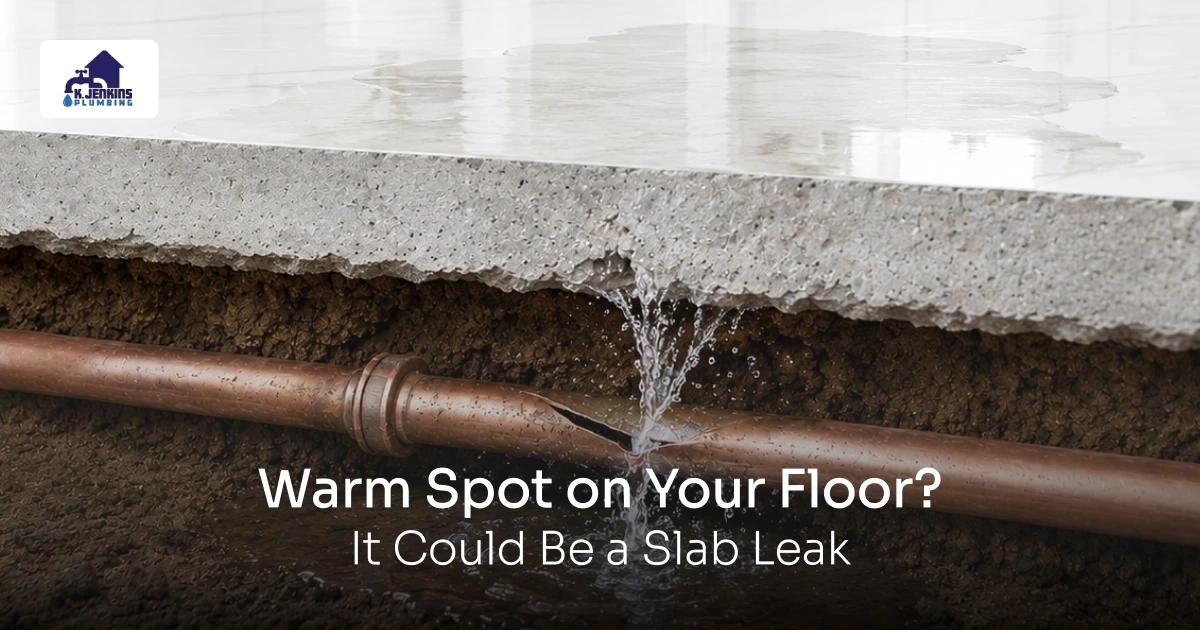
Does K. Jenkins Plumbing handle slab leak detection in Northern Virginia?
Yes. We locate and repair slab leaks across Winchester, Northern Virginia, and West Virginia. We use acoustic listening equipment and pressure testing to find the exact leak position before any concrete work is done, keeping the repair footprint as small as possible. Call 540-760-0341 to schedule.
How long does copper repiping last in a Virginia home?
Copper pipe properly installed by a licensed plumber typically lasts 50 years or more. The actual lifespan depends on local water chemistry, water pressure levels, and whether routine maintenance is performed. In Northern Virginia and West Virginia, copper repiping is generally considered a one-time fix for the life of the home.
Will repiping my Virginia home increase its value?
It can, yes. Updated copper plumbing is a positive factor in home inspections and appraisals. Buyers’ inspectors routinely flag old galvanized steel or polybutylene pipe systems as deficiencies. Replacing them removes that flag and demonstrates that the home’s infrastructure has been properly maintained. This is particularly relevant for homes in Winchester, Leesburg, and Ashburn that are in active real estate markets.
Is repiping covered by homeowner’s insurance in Virginia?
Homeowner’s insurance policies vary significantly in what they cover regarding plumbing. Most policies cover sudden water damage from a burst pipe but not the gradual deterioration that leads to repiping. It’s worth reviewing your specific policy and speaking with your insurance provider before scheduling work. We can provide documentation of the pipe condition as part of our pre-work inspection.
What pipe material is best for repiping a Virginia home?
Copper is the long-standing standard for residential water supply lines and meets all Virginia plumbing code requirements. PEX is a modern alternative that costs less and installs faster, particularly useful in homes where wall access is limited. The right choice depends on your home’s layout, budget, and local water chemistry. Our team will recommend the appropriate material after inspecting your specific system.
How disruptive is the repiping process for my family?
Less disruptive than most homeowners expect. Most whole-home repiping projects in Northern Virginia take 1-3 days. Our team makes targeted wall access points rather than opening entire walls, and water service is typically restored each evening. Furniture and flooring in work areas are protected throughout the job.