Is Your Home Ready for a Gas Stove Before the Holidays?
A new gas line for stove service means a licensed plumber runs a dedicated pipe from your gas supply, adds a shutoff valve, pressure tests the line, and arranges the inspection before the stove is connected.
Many homeowners decide to switch to gas just before the holidays, when cooking takes center stage. The catch is timing. Pipe work, permits, and inspections take planning, so starting early keeps your kitchen on schedule.
K. Jenkins Plumbing handles residential gas line installation, from the first site visit to the final flame test. This guide explains each step, what affects the job, and how to stay safe along the way.
Key Takeaways
- A stove needs a dedicated gas line with a shutoff valve, a pressure test, and an inspection before use
- Your meter, supply pipe, and other gas appliances decide whether the existing supply can handle a stove
- Permits and inspections are part of the job, and starting work without a required permit can bring a fee
- Gas line work is not a DIY project, because a small mistake can leak gas into your home
- Early booking keeps a holiday kitchen on schedule, since permits and inspections add steps
- If you smell gas, leave the home right away and call 911 or your gas utility from outside
What Does a Plumber Do When Running a Gas Line to a Stove?
Every new gas line for stove job starts with a look at your supply. We check the meter, the pipe size, and the stove’s gas rating, then plan the safest route. The steps below show how a typical job unfolds.
Step 1: Assess the Existing Supply and Stove Location
We check the meter, the supply line size, and the stove’s gas rating. We also plan the route from the supply to the kitchen. This first look decides whether the line runs cleanly or needs an upgrade. Planning saves time.
Step 2: Run the New Line to the Kitchen
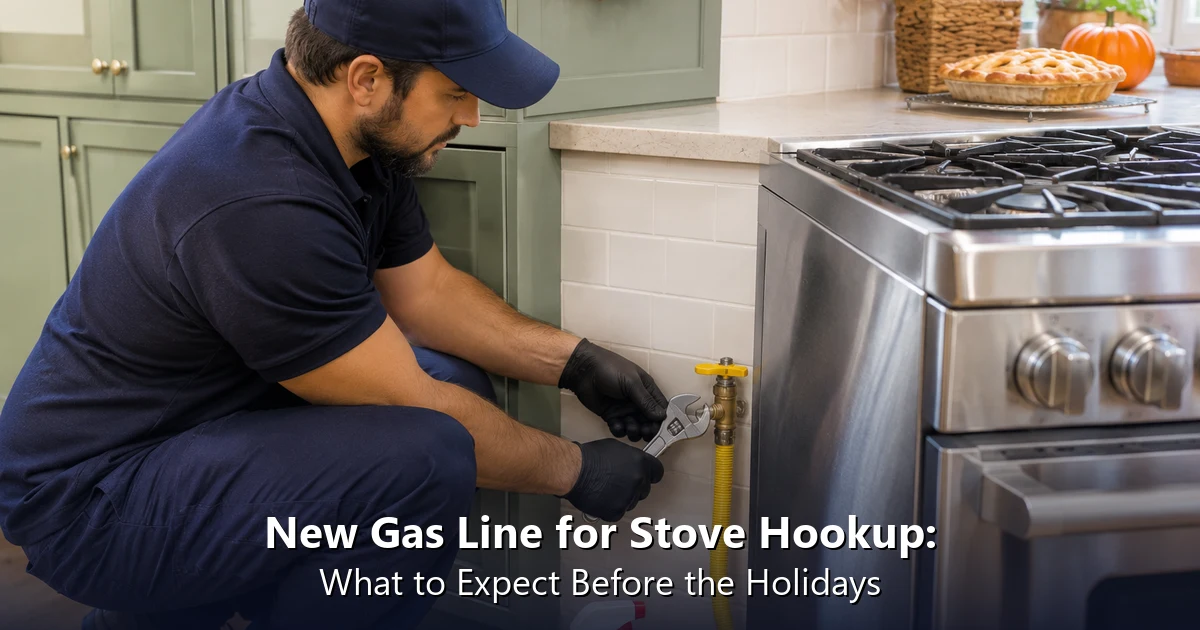
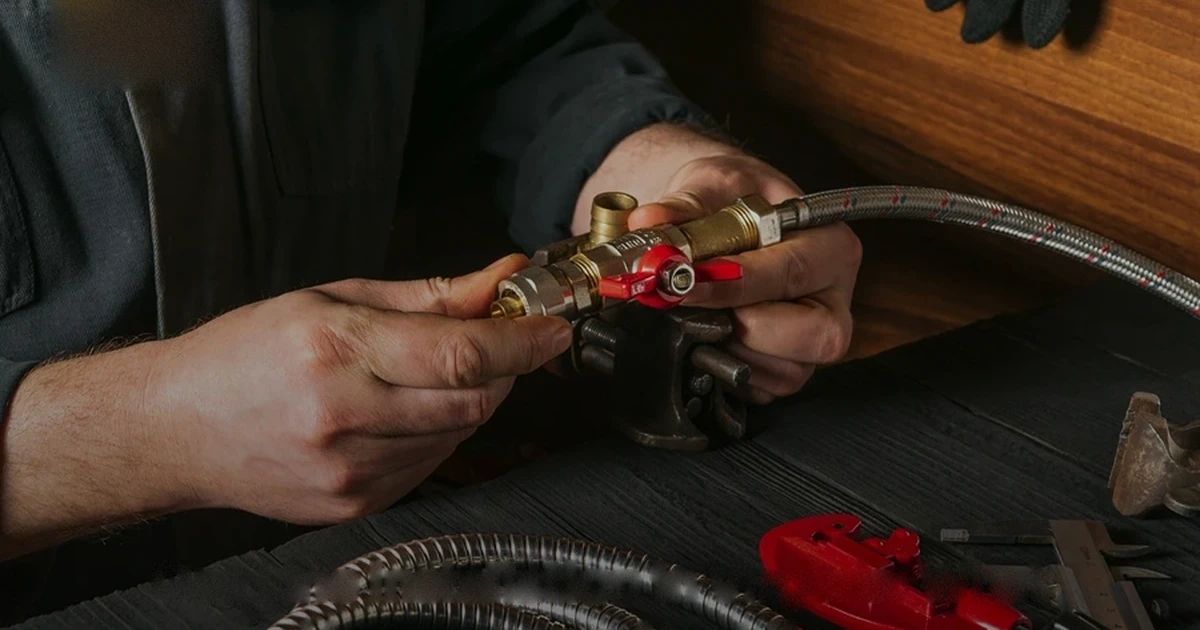
A licensed gas line plumber installs the new pipe along the planned route. A shutoff valve goes in near the stove. That valve lets you turn off gas to the stove alone, which makes service and emergencies safer.
Step 3: Pressure Test the Line
Before the stove is connected, we pressure test the line to confirm it holds and has no leaks. A line that loses pressure is found and fixed at this stage. It is never left for later, after the stove is in place.
Step 4: Pass the Inspection
Gas piping is permitted and inspected in our service areas, and we handle that process for you. The inspector checks the work before the line goes into service. Only then is the stove used for cooking.
Step 5: Connect the Stove and Test the Flame
We connect the stove with a flexible connector, check every joint for leaks, and light each burner to confirm a steady flame. We also make sure the anti-tip bracket is in place. Then we show you the shutoff valve.
Read More About: Gas Line Installation in Virginia: What Homeowners Must Know
Can Your Existing Gas Supply and Meter Handle a New Stove?
A stove adds demand to a system that may already feed a furnace, a water heater, or a dryer. If the supply is too small, burners can run weak and the stove can underperform. Size matters here, so we check first.
Every gas appliance has a BTU rating, which is its gas demand. We add up the total load of everything on the line and compare it with your meter and pipe size. That tells us whether the supply can carry one more appliance.
Most homes can take another appliance, but older homes or homes with heavy gas demand may need a supply upgrade first. We tell you that before any work begins, along with the upfront price for the whole job.
If an upgrade is needed, we explain why it is needed and what it changes. You decide with the full picture in front of you. Nothing starts until you approve the plan and the upfront price. That is how we work.
Do You Need a Permit and Inspection for a Stove Gas Line?
Permits protect you. Most building work needs one, and a gas line is no exception in our service areas. We pull the permit, schedule the inspection, and keep the paperwork in order so you do not have to.
Rules differ between the City of Winchester, Frederick County, and other localities, so the exact steps depend on your address. We explain what applies to your home when we assess the job. No guessing needed.
The City of Winchester states plainly what happens when permits are skipped. Its permit page covers building permits, and it warns about the cost of starting work too early. That is a useful warning for any homeowner.
“A fee may be charged for starting work without required permit(s).”
– City of Winchester, VA: Permits, Licensing & Applications
That fee is one reason to avoid shortcuts. Unpermitted gas work can also raise questions when you sell the home or file an insurance claim. A permitted, inspected line keeps your paperwork clean. Clean records matter.
Can a Homeowner Run Their Own Gas Line to a New Gas Stove?
Gas line work is not a DIY project. A small mistake in a joint or a connector can leak gas into your home, and a gas leak is a serious fire and health risk. Licensed plumbers test their work for that reason.
Even a simple gas stove hookup can disturb the connector or the shutoff valve. If you have ever wondered whether an old line was tested, it is worth having a plumber check it before the first big meal.
For the legal side of who may do this work in Virginia, read our gas line installation guide. It covers licensing and permits in more detail. It also explains the process and which appliances commonly need a new line.
Hiring a licensed residential gas line plumber also protects you after the job. Our work is tested, permitted, and inspected, so you can use the new stove with confidence from the first meal. Peace of mind is part of the service.
| Ready to Switch to a Gas Stove? Searching for plumbers near me to run a gas line safely? Our licensed team installs, tests, and inspects the line before your stove goes in. Call any hour, and we’ll come to Winchester and nearby towns. |
How Can You Prepare for the Installation Before We Arrive?
A little preparation speeds up the visit. Clear a path to the kitchen and to the gas meter, and make sure the stove is on site or its model number is handy. Tell us about any other gas appliances in the home.
Plan for the stove too. Measure the space, and check that an outlet is nearby for the igniter and controls, since most gas ranges still need electricity. Good prep means fewer surprises on install day.
Book early in the season. Holiday schedules fill quickly, and permits and inspections add steps that we cannot rush. Starting a few weeks ahead gives you the best chance of cooking on the new stove. Early is easier.
Our residential plumbers handle the whole job, from the assessment to the final test. Restaurants and caterers adding gas equipment can call our commercial plumbers for the same careful work. The standard is the same.
| Want a Gas Line Plan Before the Holidays? Searching for plumbing services near me to plan a stove upgrade? We inspect your supply, explain what we find, and quote the job up front. Our family-owned crew keeps it clear, with no pressure. Call or book online. |
The same advice applies across our region. We serve homeowners in Frederick County, Warren County, and nearby communities who are adding gas appliances. Just call us with your questions. We are glad to help.
We also help families in Clarke County, Martinsburg, Charles Town, and the Eastern Panhandle of West Virginia, where local permit steps can differ from town to town. Our team brings the same careful service everywhere.
What Should You Do If You Smell Gas Near Your Gas Stove?
Know the warning sign. Natural gas has an added odor that smells like rotten eggs. If you smell it, treat it as an emergency, even if you think you caused it by leaving a burner on. Do not wait and see.
Leave the home right away and take everyone with you. Call 911 or your gas utility from outside. Do not use switches, lighters, or phones inside, since a spark can ignite gas. Pets should go with you, too.
Once the area is safe, call us to inspect the line before you cook again. We offer 24/7 emergency help for gas leaks in Winchester and nearby towns, and we find the source before we restore service. Safety comes first.
Conclusion
A new gas line for stove hookup is a safe, routine job when a licensed plumber handles it. Check your supply, plan for permits and inspections, prepare the space, and book early so the holiday kitchen is ready.
Our family treats every call like it’s our own home. K. Jenkins Plumbing brings licensed technicians and honest pricing to every gas line job. When you are ready to start, contact us and we’ll take it from here.
FAQs
Does a gas stove still need an electrical outlet nearby?
Yes. Most gas ranges use electricity for the igniter, clock, and controls, so you still need a nearby outlet. We check this during the assessment, before work begins.
Can my existing gas supply and meter handle a new stove?
We check your meter capacity, the stove’s gas demand, and the supply line size. Older homes or homes with other gas appliances may need a supply upgrade first.
What affects the price of running a gas line to a new stove?
Distance from the supply, access through walls or floors, any supply upgrade, and permit fees all matter. We give an upfront quote after the site assessment.
How far ahead should I book a gas line before the holidays?
Book a few weeks ahead. The visit, permit, and inspection each add time, and a supply upgrade can add more. Holiday schedules fill fast, so booking early protects your cooking date.
What should I do if I smell gas after my new stove hookup?
Leave the home right away, then call 911 or your gas utility from outside. Do not use switches, lighters, or phones inside. Call us to inspect before you cook again.
Can a new gas stove cause carbon monoxide in my kitchen?
A properly installed, adjusted stove burns cleanly, but poor venting or a faulty burner can release carbon monoxide. Keep a CO alarm nearby and call us if the flame burns yellow or orange.
Can I reuse my old gas pipe when I install a new stove?
Sometimes. A pressure test and inspection show whether the old pipe is sound, sized right, and code compliant. Corroded or undersized pipe should be replaced before the new stove is connected.
What should I ask a plumber before hiring for gas work?
Ask if they are licensed, whether the permit and inspection are included, and if the quote is written and upfront. Compare quotes on scope and testing, not only price.
Do I buy the gas connector, or does the plumber supply it?
Ask before the visit. A new appliance usually gets a new approved connector, not the old one. We confirm the right connector for your stove, then test every joint for leaks.
Does a plumber or the gas utility run the line to my stove?
A licensed plumber runs the pipe inside your home from the meter to the stove. The gas utility usually handles the meter and the service line outside, so call them if the supply needs work.