How Do You Know It’s Your Sewer Line and Not a Simple Clog?
A sewer line backup is wastewater that can’t leave your home and returns through the lowest drain it can find. If several fixtures slow down, gurgle, or back up together, the blockage is in the main sewer line, not one sink.
Here’s a quick test. Flush the toilet and watch the bathtub. If the tub gurgles or fills, or if a basement floor drain bubbles, the shared line is blocked. A single slow sink is usually a local clog you can often handle yourself.
K. Jenkins Plumbing clears these blockages across Winchester, Virginia and the surrounding counties. This guide explains the warning signs, the first steps to take, and how our crews choose between a camera, a cable, and high-pressure jetting.
Key Takeaways
- Several fixtures backing up at once points to the main line, while one slow drain is usually a local clog
- Stop using water the moment you suspect a backup, because every flush or load of laundry adds to the problem
- Keep people and pets away from affected areas, and avoid touching contaminated water or surfaces
- A camera inspection shows the true cause before anyone cuts, digs, or jets, which prevents costly guesswork
- Jetting clears grease, scale, and soft blockages, but a collapsed or broken pipe needs repair instead
- Dry wet materials fast, since EPA guidance targets a 24 to 48 hour window to head off mold
What Should You Do in the First 30 Minutes of a Backup?
A good sewer backup response means you stop all water use, keep people and pets away, ventilate the area, avoid chemical drain cleaners, and call a plumber. These steps limit exposure and protect the pipe until a technician arrives.
Act fast, but stay safe. You don’t need tools for any of these steps, and none of them requires touching the blockage. Work through them in order, and call for help as soon as you’ve stopped the water.
Step 1: Stop Using All Water in the House
Don’t flush toilets, run sinks, start the dishwasher, or do laundry. Every gallon you send down a blocked line has nowhere to go, and it will push more wastewater out through the lowest drain in your home.
Step 2: Keep Family and Pets Away From the Area
Sewage can carry bacteria and viruses, so keep children and pets out of affected rooms. If you must enter, wear rubber boots and gloves, and wash your hands thoroughly with soap and clean water afterward.
Step 3: Skip Chemical Drain Cleaners and Open Windows
Chemical cleaners rarely clear a main line blockage, and they leave caustic liquid in the pipe that can burn a technician’s skin. Open windows for airflow if it’s safe, and don’t mix any cleaning products.
Step 4: Find Your Cleanout and Photograph the Damage
Locate your cleanout, a capped pipe fitting near the house or in the basement, so the plumber can reach it fast. Photograph affected areas, since insurers often want clear proof of the loss and its extent.
Step 5: Call a Plumber and Report What You See
Call and describe which fixtures are affected, whether raw sewage is present, and what you’ve already done. Clear details let the dispatcher send the right crew and the right equipment on the very first trip.
| Sewage Coming Back Up? Call Us Now Need plumbers near me for a sewer backup? Our licensed team responds around the clock in Winchester and the surrounding area. Tell us what you’re seeing, and we’ll send the right crew and equipment fast. |
What Causes Sewage to Come Back Up Into Your Home Drains?
Most backups start with something slowly narrowing the pipe. Grease poured down kitchen drains cools and coats the walls. Wipes labeled flushable don’t break down. Over time, the pipe closes until a small plug finishes the job.
Tree roots are a leading cause in older neighborhoods. Roots follow moisture, slip through tiny cracks or loose joints, and grow into a dense mat that catches everything passing through. The blockage returns until the root source is dealt with.
Pipe condition matters just as much. Older lines made of clay, cast iron, or fiber can crack, sag, or collapse. A sag, sometimes called a belly, holds water and waste at a low spot, and solids settle there and build up.
Sometimes the problem isn’t on your property. If your neighbors have the same trouble, the municipal main may be blocked. Call your local sewer authority too, because repair responsibility changes once the blockage sits beyond your property line.
Read More About: Clogged Drain That Keeps Coming Back? Here’s the Real Reason
How Does a Plumber Find the Real Cause of the Blockage?
A sewer camera inspection is the fastest way to learn what’s really wrong. A technician feeds a waterproof camera on a flexible cable through the cleanout and watches live video. The screen shows grease, roots, cracks, or a collapsed section.
A sewer camera inspection uses a small waterproof camera on a flexible cable to record the inside of a pipe, showing the location and cause of a blockage or damage before anyone digs or cuts into your yard.
The footage matters because the right fix depends on the cause. A grease plug needs cleaning. A root intrusion needs cutting and maybe a repair. A broken pipe needs replacement. Guessing wastes money and can make damage worse.
Ask for a copy of the recording. Good plumbers share it, mark the problem spots, and explain what they see in plain English. You can use it for insurance, for a second opinion, or to compare against a future inspection.
A camera can also show the depth and path of the line, which helps if a repair is needed. Knowing exactly where the damage sits can turn a yard-wide dig into a small, targeted fix that costs far less money.
When Is Jetting the Right Fix, and When Should You Avoid It?
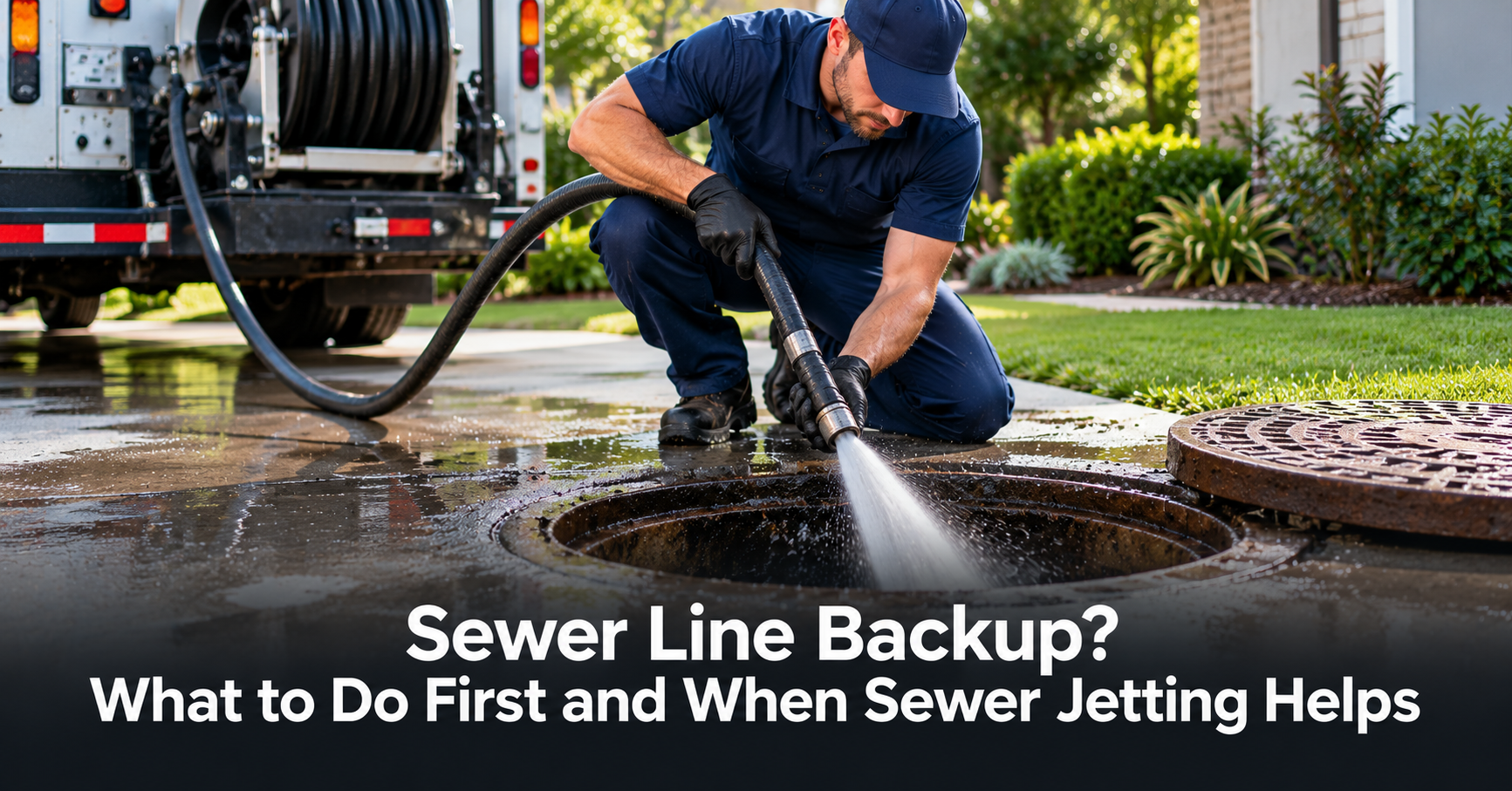
Sewer jetting sends high-pressure water through a nozzle to scour grease, scale, and debris from the inside of a pipe wall, restoring the full diameter instead of just poking a small hole through the blockage.
This method works well on grease buildup, soap scum, mineral scale, and soft debris. It cleans the whole circumference of the pipe instead of punching a hole through the blockage, which is why results tend to last longer than cabling alone.
It can also cut through roots. After a camera inspection confirms the pipe is structurally sound, the technician uses a jetting head with cutting action to clear the intrusion. Without a sound pipe, though, jetting can do harm.
A cracked, bellied, or collapsed line is a different story. High-pressure water can worsen weak spots, so the camera always comes first. If the video shows damage, you need a repair plan instead of another cleaning.
Compared with a hand-fed cable, which pokes a path through a clog, sewer jetting scrubs the pipe clean. For recurring problems, that difference often decides whether you’re calling again in six months.
Read More About: Hydro Jetting vs Snaking: Which Clears Clogs Faster?
What Are Your Repair Options if the Pipe Itself Is Damaged?
If the camera finds damage, the plumber will usually offer more than one option. The choice depends on the type of damage, how much of the line is affected, and what sits above it, such as a driveway, patio, or mature landscaping.
Spot repair replaces only the failed section. It suits a single crack or a short broken stretch, and it limits digging. Full replacement makes sense when the whole line is aging, sagging, or failing at several joints.
Trenchless methods can fix some lines without opening the whole yard. They’re not right for every pipe, so ask your plumber whether your line qualifies and what the long-term durability and warranty look like.
Ask for written options with prices, timelines, and warranty terms. A reputable contractor won’t pressure you toward the most expensive choice, and our residential plumbers lay out each path before any digging starts.
Wet materials need quick attention too. According to EPA guidance, strategies for responding to water damage are built around a 24 to 48 hour window, which is meant to head off mold growth before it starts.
“Table 1 presents strategies to respond to water damage within 24-48 hours. These guidelines are designed to help avoid the need for remediation of mold growth by taking quick action before growth starts.”
– U.S. EPA, Mold Remediation in Schools and Commercial Buildings Guide: Chapter 4
According to EPA, carpet and backing should also be dried within 24 to 48 hours. Sewage is more hazardous than clean water, and soaked carpet and padding are often discarded, so ask a restoration professional before deciding what can be saved.
| Want to Know What’s Inside Your Sewer Line? Want plumbing services near me that start with a camera? We’ll run one through your line, show you the footage, and explain every option, so you know the cause before you spend a single dollar on any digging. |
How Can You Keep Your Sewer Line From Backing Up Again?
Prevention starts in the kitchen and bathroom. Keep grease out of drains, wipe pans before washing, and toss wipes, paper towels, and feminine products in the trash. Only toilet paper and waste belong in the toilet.
Plan for trees. If large trees grow near your sewer line, a yearly camera check can catch early root intrusion. Cutting roots while they’re young is far cheaper than repairing a pipe they’ve already broken apart.
Keep the cleanout accessible and clearly labeled. A buried or blocked cleanout turns a quick job into a dig. Mark it, keep the area around it clear, and tell everyone in the household exactly where it is.
Ask about a backwater valve, a device that lets wastewater leave but blocks it from returning. Many homes with basement fixtures benefit from one, and a licensed plumber can tell you whether your layout and local rules call for it.
Finally, review your insurance. Some homeowners policies exclude sewer backup unless you add coverage, so it’s worth a call to your agent. Homeowners in Frederick County and Clarke County can call us any time to schedule an inspection.
Business owners face this too. A backed-up main line can shut a restaurant or office for a day, so our commercial plumbers can help with camera inspections, jetting, and drain care, and regular maintenance keeps lines clear.
We also work in Warren County, Martinsburg, Charles Town, and the Eastern Panhandle of West Virginia, so homeowners and businesses on both sides of the state line can book a camera inspection with our team.
Conclusion
A sewer line backup feels like a disaster, but a calm response makes a big difference. Stop using water, keep your family safe, and get a camera on the line before anyone starts cutting. The right diagnosis leads to the right fix.
Our family treats every call like it’s our own home. K. Jenkins Plumbing has served Winchester families for 22 years with licensed technicians and honest pricing. If your drains are backing up, contact us and we’ll take it from here.
FAQs
What is the first thing to do during a sewer line backup?
Stop all water use right away. Don’t flush or run sinks, keep people and pets out, and call a plumber. Extra water only forces more wastewater back into your home.
How can I tell if my main line is blocked or just a drain?
If several fixtures slow, gurgle, or back up at once, the main line is likely blocked. One slow sink usually points to a local clog rather than the shared sewer line.
Is sewer jetting safe for every pipe in an older house?
Not always. Jetting suits sound pipes with grease, scale, or roots. A cracked or collapsed line needs a camera check first, since high pressure can worsen weak spots.
Who pays when a sewer backup damages my home in Virginia?
It depends on the cause and your policy. Some homeowners policies exclude sewer backup unless you add coverage, so check your policy and ask your agent promptly.
How often should I schedule a camera inspection of my line?
Older homes and properties with large trees benefit from a yearly check. Newer homes can often go longer, but a camera look is wise before buying or after repeated clogs.